Play Training
Google Advertiser Verification
Introduction 10 of 10
How to Handle Advertiser Verification Requirements.
Google Advertiser Verification is a pivotal measure introduced by Google to uphold the integrity and security of its advertising ecosystem. This initiative is driven by the dual purpose of creating a safe space for users and aligning with emerging regulations. Advertisers are now mandated to participate in one or more verification programs to ensure compliance and maintain a trustworthy advertising environment.
Please watch the Training Video below.
 Related How To Guides:
Google Advertiser Verification
This training will show you How to Handle Advertiser Verification Requirements.
Here's What we’ll cover in this training:
- What is Google Advertiser Verification
- How to Know If Your Advertiser is Affected
- How to Communicate with Advertisers
- The Verification Process
What is Google Advertiser Verification
As we've learned Advertiser Verification is designed to provide a safe and trustworthy ad ecosystem for users, and to comply with emerging regulations, Google will require advertisers to complete one or more verification programs.
The Advertiser verification program comprises a series of steps that advertisers will be required to follow and complete. Under this program, advertisers will be asked to provide basic information about their business and identity.
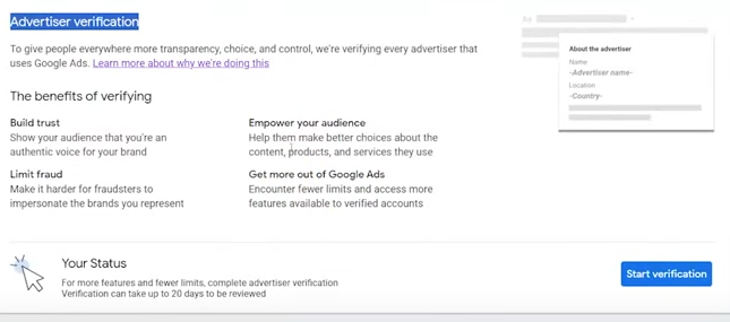
Google Ads Transparency Center
Once Google verifies the advertiser's information, Google will show the advertiser's information such as the name, location, and the ads they served over a certain time period on Google platforms (including Google Search and YouTube) in the Ads Transparency Center and in ad disclosures. Here's an example of the Google Ads Transparency Center available at adstransparency.google.com
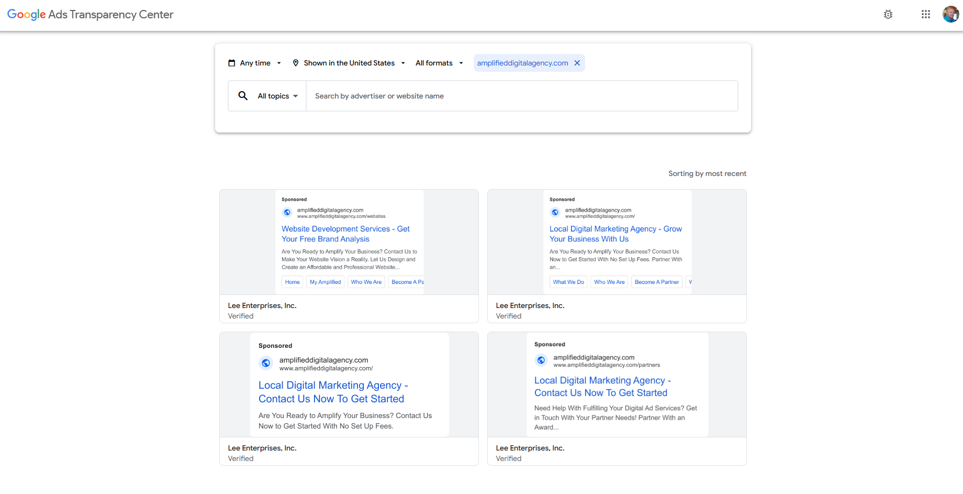
Open the Google Ads Transparency Center
How to Know if Your Advertiser is Affected
To navigate the landscape of Google Advertiser Verification, it is crucial to identify whether your advertiser is impacted. This can be determined through alerts provided by Affinity X Digital. Affinity X will send detailed notifications via email, offering insights into the verification requirements and the subsequent steps to be taken.
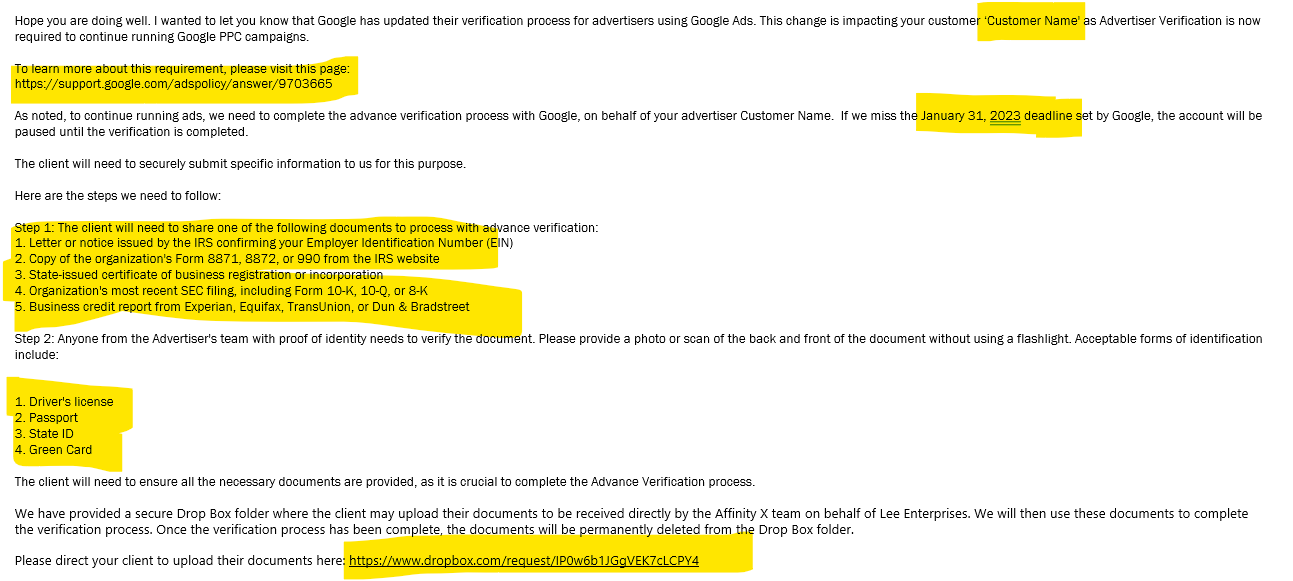
Let's take a look at an example:
You'll notice details in the email surrounding the affected Advertiser, including the deadline for Verification and the documents required. As well as the private, secure link to upload their documents.
How to Communicate with Advertisers
Clear and effective communication with advertisers is paramount during the verification process. The training covers strategies and best practices for communicating with advertisers who have been selected for verification.
1. Take a Copy of the Email and Send to the Client:
It is highly recommended to maintain transparency and keep clients informed about the Google Advertiser Verification process. One effective way to achieve this is by taking a copy of the email received regarding the verification and promptly forwarding it to the client. This ensures that clients are aware of the situation, understand the steps involved, and are prepared to comply with the verification requirements.
2. Direct Clients to the Google Page Describing the Process:
Empowering clients with information is crucial during the verification process. The provided Google page provided here serves as a comprehensive resource detailing the verification process. Clients should be directed to this page to gain a thorough understanding of what is expected from them, the required documents, and the overall timeline. This self-help resource enables clients to navigate the process independently and efficiently.
https://support.google.com/adspolicy/answer/9703665
- Lee is Unable to Answer Questions Related to Why an Advertiser Was Selected:
t's important to emphasize that Lee, or any other agency involved, cannot provide information or insights into the criteria Google uses for selecting advertisers for verification. The selection process is controlled solely by Google, and agencies are not privy to the specific reasons behind an advertiser being chosen. This reinforces the importance of directing any inquiries related to the selection criteria to Google's official documentation or support channels. -
Lee is Unable to Control the Verification Process, Except to Facilitate:
Highlighting the limited control agencies, such as Lee, have over the verification process is crucial. While agencies play a facilitating role by posting the verification on behalf of the client to Google, they do not have the authority to influence the selection or approval process. This distinction is essential for clients to understand, ensuring that expectations align with the procedural limitations agencies face. The primary role of agencies is to assist in the smooth facilitation of the verification process without controlling its outcomes.
In summary, these recommendations underscore the importance of open communication with clients, guiding them to relevant resources, clarifying the limitations of agency involvement in the process, and ultimately facilitating a collaborative and transparent approach to Google Advertiser Verification.
Let's learn about the Advertiser Verification Process
1. Google Selects Advertisers/Accounts for Verification:
The initiation of the Google Advertiser Verification process begins with Google autonomously selecting specific advertisers or accounts for scrutiny. This selection is a dynamic process determined by Google's algorithms and criteria, and agencies, including Lee, have no influence over this selection. It is part of Google's commitment to maintaining a secure and trustworthy advertising environment.
Lee (or Any Other Agency for Client) Does Not Control This Selection:
It is crucial to clarify that agencies, such as Lee, do not play a role in the selection process of advertisers/accounts for verification.
2. Google Sets a Deadline of 30 Days After Notice for Verification:
Once an advertiser is selected for verification, Google establishes a timeframe for completing the verification process. The standard deadline provided is 30 days from the date of the initial notice. This deadline is a critical component of the process, and it is imperative for advertisers to adhere to it to avoid disruptions to their ad campaigns.
- Ads Will Be Paused Until Verification Is Complete:
To enforce the importance of timely verification, Google has implemented a safeguard. If an advertiser fails to complete the verification process within the stipulated 30-day timeframe, Google will temporarily pause their ads. This suspension aims to ensure compliance with the verification requirements and maintain the integrity of the advertising ecosystem. - Verification Duration Can Range from 2 to 3 Days and Up to 20 Days
The actual duration of the verification process varies, ranging from a minimum of 2 to 3 days up to a maximum of 20 days. This timeframe includes the period from the initiation of the verification request to its completion. Factors influencing the duration may include the complexity of the verification requirements and the responsiveness of the advertiser in providing the necessary documentation.
3. Lee Sales Will Be Alerted, and Secure Dropbox Link Provided:
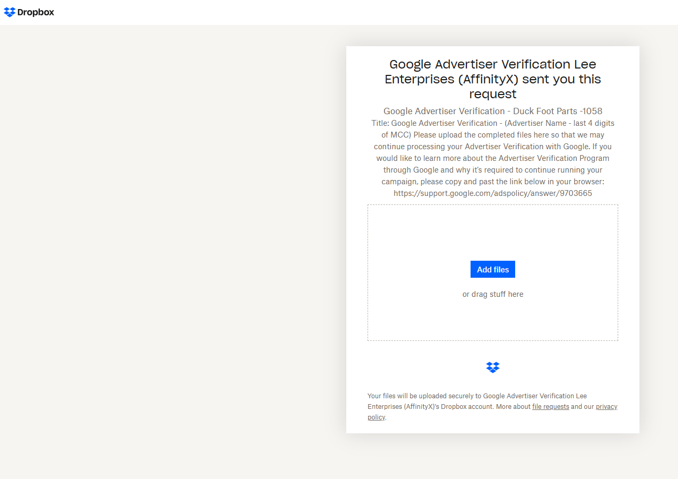
Upon notification that an advertiser requires verification, Lee Sales are promptly alerted. In response to this notification, a secure Dropbox link is provided via email to the client. This link serves as a secure channel for the client to upload the required verification documents. The use of a secure platform ensures the confidentiality and integrity of the sensitive documentation throughout the verification process.
Let's look at the Secure Drop Box link that will be used by clients to submit required documents.
- During every verification, a unique link for secure document submission will be provided. This uniqueness is a critical aspect of ensuring the confidentiality and integrity of the verification process.
- Files uploaded through the unique links are subject to permanent deletion upon the successful completion of the verification process. This deletion is a deliberate step taken to ensure that no residual copies of sensitive documents remain in the system.
Direct Clients to Google for Documentation
Encouraging clients to refer to Google's official documentation is crucial for a comprehensive understanding of the Advertiser Verification process. The provided link directs clients to a dedicated resource where they can find detailed information about the verification requirements, guidelines, and frequently asked questions.
https://support.google.com/adspolicy/answer/9703665
- Limited Scope in Answering Questions
It's essential to communicate the agency's limitations regarding inquiries related to Advertiser Verification. The agency, in this case, Lee, can only address questions related to the process of collecting the required documents securely via Dropbox. Any queries beyond the scope of this specific process, such as why a particular advertiser was selected for verification, fall outside the agency's purview. Directing clients to Google's documentation ensures they receive accurate and authoritative information regarding the broader aspects of Advertiser Verification. - Lack of Control Over Google's Verification Approval
Highlighting the agency's lack of control over Google's approval process is crucial for managing client expectations. Emphasize that the agency, including Lee, does not have influence or control over whether Google approves the verification submitted by the client. This clarification underscores the impartiality and autonomy of Google's verification procedures. Clients should understand that the agency's role is primarily to facilitate the submission of documents and not to influence the decision-making process conducted by Google.
Take a Collaborative Approach
While the agency may not control the approval process, it is crucial to convey a commitment to collaboration. The agency is dedicated to assisting clients in the secure submission of required documents, ensuring a smooth and efficient verification process. This collaborative approach reinforces the agency's role as a supportive partner in navigating the intricacies of Advertiser Verification, even though the final decision lies with Google.
Contact AX Fulfillment for Questions on Advertiser Verification:
Please contact your fulfillment team via fulfillment@visionvx.com to inquire more about Advertiser Verification.